
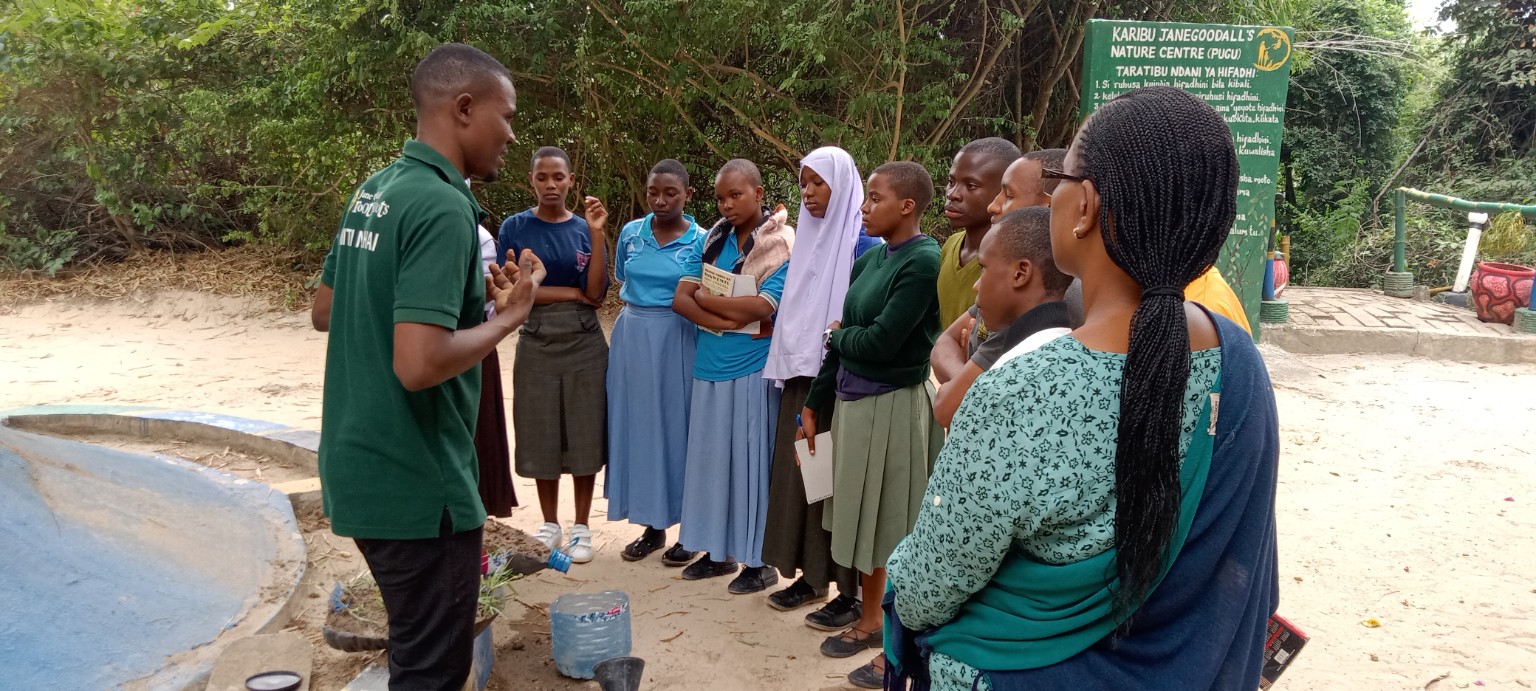
Environmental education is most powerful when learners can connect classroom knowledge with the natural world. A visit to Jane Goodall’s Nature Centre in Pugu, Tanzania, offers a valuable example of how students can learn about biodiversity, wildlife protection and responsible care for the environment through direct observation and discussion.

Learning beyond the classroom
Field-based learning gives young people an opportunity to observe natural environments, ask questions and understand why ecosystems matter. Through interaction with environmental educators, students are encouraged to appreciate the value of forests, plants and wildlife, and to recognise their role in protecting them.

Understanding and protecting wildlife
Learning about wildlife helps students understand that every species has a place in nature. The supervised presentation of a tortoise provided an opportunity to observe a living animal and discuss the importance of respecting wildlife, protecting habitats and avoiding activities that threaten biodiversity.


Turning environmental knowledge into action
Environmental awareness becomes more meaningful when it is linked to practical action. Demonstrations and discussions about soil, plants and care for green spaces can inspire learners to take positive steps at school and at home, including caring for seedlings, keeping their surroundings clean and supporting tree-growing initiatives.


Building a generation of environmental ambassadors
NEVAPO recognises the importance of empowering children and young people with knowledge, skills and opportunities to participate in environmental protection. By supporting environmental education, biodiversity conservation and community action, we can help nurture responsible citizens who value nature and contribute to a cleaner, healthier and more sustainable Tanzania.
Our message: Protecting nature starts with understanding it. Every learner, school and community can play a part in safeguarding our shared environment for present and future generations.